When the Storm Passes, We're Here to Help You Move Forward.
Southern California is known for its sunshine, beautiful landscapes, and outdoor living. But when powerful winds, heavy rains, and seasonal storms arrive, they can leave behind more than a little mess.
Fallen branches, scattered vegetation, mud, rocks, and damaged materials can quickly turn a well-maintained property into a challenging cleanup project. At United Demolition and Hauling, we help Southern California homeowners, property managers, contractors, and landowners reclaim their properties through professional storm debris removal and cleanup services. Whether strong Santa Ana winds have scattered branches across your acreage, heavy rain has washed sediment onto your driveway, or a storm has left piles of unwanted debris around your property, we provide practical cleanup and hauling solutions to help restore access and usability.
From residential neighborhoods to larger rural properties, our focus is on helping you clear the mess and move forward.
The Storm May Be Over. The Cleanup Is Just Beginning.
After severe weather, the amount of debris left behind can be overwhelming. Large branches may block driveways. Windblown vegetation can collect along fences and structures. Heavy rainfall can carry soil, rocks, and sediment into access roads, parking areas, and landscaped spaces. For larger properties, these materials can accumulate across extensive areas, making cleanup difficult without appropriate equipment.
Storm debris removal involves gathering, loading, transporting, and properly disposing of unwanted materials generated or displaced by severe weather. Depending on the property, cleanup may also require clearing access routes, removing storm-deposited soil, or preparing damaged areas for additional grading and repairs. At United Demolition and Hauling, we understand that restoring a property after a storm is about more than improving its appearance. It's about helping you regain access, reduce obstacles, and prepare for whatever comes next.
Restore Property Access Clear designated driveways, walkways, and access routes obstructed by storm debris.
Reduce Safety Hazards Remove accessible fallen branches, loose materials, and scattered debris from uusable areas.
Improve Property Appearance Help return storm-affected spaces to a cleaner, more orderly condition.
Simplify Recovery Manage bulky debris removal without requiring property owners to handle heavy materials themselves.
Our Storm Debris Removal Solutions
Fallen Branch and Vegetation Cleanup
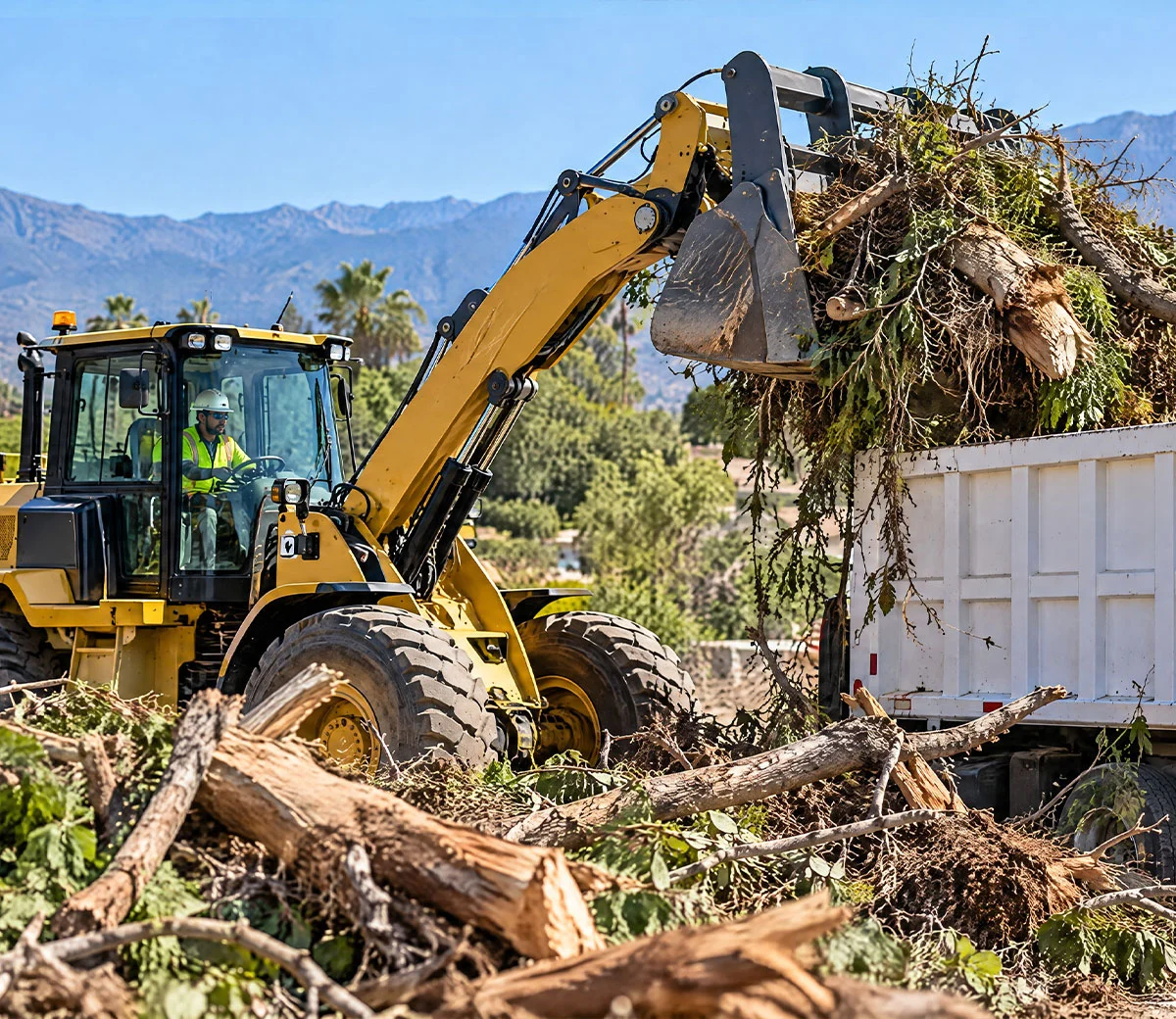
Strong winds can bring down large branches and scatter vegetation across yards, driveways, and open land. We help collect and remove accessible fallen branches, brush, and other storm-damaged vegetation.
Windblown Debris Removal
Santa Ana winds and other powerful weather events can scatter loose materials across properties. We help clear suitable windblown debris from designated areas to restore a cleaner, more manageable environment.
Driveway and Access Road Clearing
Storm debris can block private roads, long driveways, and equipment access routes. Removing fallen vegetation, rocks, and accumulated material helps restore usable access once the area is safe to enter.
Mud, Sediment, and Storm-Deposited Soil Removal
Heavy rainfall and runoff can wash dirt, gravel, and sediment into unwanted areas. We help remove suitable deposits from driveways, hardscapes, and other accessible surfaces as part of property cleanup.
Rock and Loose Material Removal
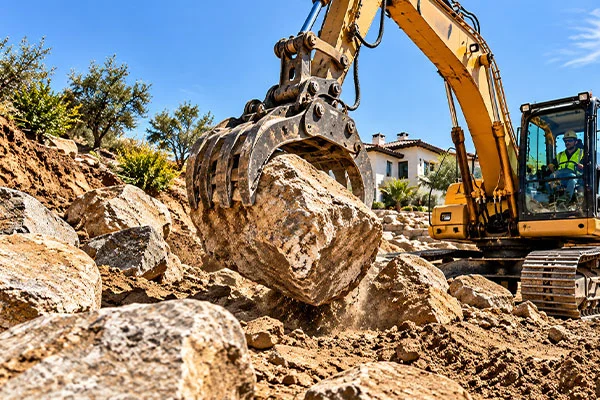
Stormwater can dislodge loose rocks and carry debris onto roads, pathways, and developed areas. Depending on size and site conditions, we help remove these obstacles and prepare affected areas for additional work.
Bulk Storm Debris Loading and Hauling
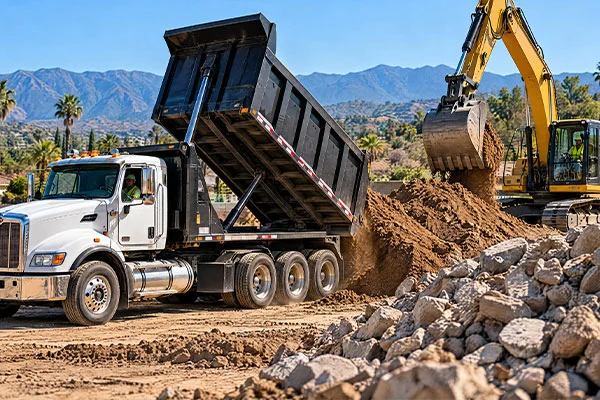
Large cleanup projects can generate more debris than ordinary residential collection services can accommodate. We help load and haul approved
Southern California Storms Bring Unique Challenges
Southern California's climate may be relatively dry for much of the year, but its seasonal weather can create significant property maintenance challenges.
Different weather events leave behind different types of debris.
Santa Ana Winds
Strong, dry winds can break tree limbs, scatter brush, displace lightweight materials, and leave vegetation across roads and open spaces.
Properties with mature trees, extensive landscaping, or large natural areas may experience particularly widespread debris.
Heavy Winter Rainstorms
Intense rainfall can generate runoff that carries soil, gravel, branches, and other materials downhill.
Low-lying areas, driveways, drainage paths, and properties below steep slopes may experience sediment accumulation.
Hillside Runoff and Erosion
Properties in foothill and canyon areas can be especially vulnerable to runoff-related debris.
Stormwater may move loose rock and soil into developed spaces, leaving material that requires removal and potentially additional erosion-control work.
Post-Wildfire Rainfall
Recently burned landscapes may be susceptible to increased runoff, erosion, and debris movement during storms.
These conditions can involve unstable slopes and other hazards requiring assessment by qualified professionals before cleanup begins.
At United Demolition and Hauling, we recognize that effective storm cleanup depends on the type of debris, property conditions, accessibility, and potential hazards.
Clearing Driveways, Private Roads, and Access Routes
For many property owners, restoring access is one of the most important priorities after a storm.
A blocked driveway can prevent vehicles from entering or leaving the property. Debris scattered across a private road may interfere with deliveries, maintenance equipment, or routine travel.
Rural properties and larger parcels can present additional challenges because of their long access routes and surrounding vegetation.
Professional debris removal helps address these obstacles once conditions are safe for cleanup crews and equipment.
Depending on the damage, restoring access may involve removing fallen branches, collecting scattered vegetation, hauling away rocks, or clearing accumulated sediment.
If the road itself has been washed out or structurally damaged, additional grading, drainage, or road repair services may be necessary.
Our goal is to help property owners identify practical cleanup needs and prepare affected areas for further improvements.
Storm Debris and Wildfire Preparedness
In Southern California, vegetation management is an important part of responsible property maintenance.
Storms and strong winds can leave fallen branches, dead vegetation, and other organic debris scattered around buildings, fences, and open areas.
When these materials accumulate, they can contribute to combustible fuel loads.
Removing fallen vegetation can be one useful part of an ongoing property maintenance and wildfire preparedness strategy.
However, storm debris cleanup is not the same as a complete defensible space assessment or comprehensive vegetation management program.
Properties may require additional weed abatement, brush clearing, pruning, or other work to meet applicable vegetation management requirements.
United Demolition and Hauling offers related land clearing services that property owners can discuss alongside storm debris removal.
The Storm Debris Removal Process
Every storm creates different conditions, but cleanup generally follows several important stages.
1. Evaluating the Affected Areas
The process begins with identifying debris types, estimated quantities, accessibility, and potential hazards.
2. Establishing Safe Working Conditions
Before cleanup begins, dangerous conditions such as downed power lines, unstable trees, damaged structures, or active flooding must be addressed by the appropriate utility, emergency service, or qualified specialist.
3. Planning Debris Collection
The removal approach is determined based on material types, equipment access, and the areas that need attention.
4. Collecting and Loading Debris
Accessible fallen vegetation, rocks, sediment, and other approved materials are gathered and loaded using appropriate equipment and handling methods.
5. Hauling and Disposal
Collected materials are transported to suitable recycling, green-waste, or disposal facilities according to material type and applicable requirements.
6. Preparing for Additional Improvements
Once debris is removed, the property may be ready for further work such as grading, drainage improvements, road maintenance, or vegetation management.
The exact process depends on storm conditions, site safety, and the agreed scope of work.
When Storm Cleanup Requires More Than Debris Removal
Sometimes the debris is only part of the problem.
Heavy rain may leave deep ruts along a driveway. Runoff may erode soil around a property. Wind-damaged vegetation may reveal areas that need additional clearing or maintenance.
In these situations, debris removal helps expose the underlying conditions so the next steps can be evaluated.
Depending on the property, additional services may include:
Rough grading to reshape disturbed ground.
Finish grading to refine affected surfaces.
Material spreading to replace displaced gravel or aggregate.
Road maintenance to address damaged access routes.
Land clearing or weed abatement to manage unwanted vegetation.
Significant erosion, slope instability, damaged drainage structures, or other structural concerns may require evaluation by qualified engineers or specialty contractors.
By approaching cleanup as part of a larger property recovery plan, owners can better prioritize the improvements their properties need.
Storm Cleanup for Residential, Rural, and Commercial Properties
No two properties experience storms in exactly the same way.
A suburban home may have fallen branches scattered across its driveway and yard.
A rural property may have extensive windblown vegetation, blocked access roads, and sediment washed across open land.
Commercial properties and managed common areas may need debris removed from parking areas, driveways, and shared access routes.
Each situation requires an approach suited to the property's layout and conditions.
At United Demolition and Hauling, we focus on understanding the specific cleanup challenges and identifying practical removal solutions.
Whether the affected area is relatively small or covers a larger property, our objective is to help restore usable space and prepare the site for its next purpose.
Preparing Your Property for the Next Storm
Storm debris removal addresses the aftermath of severe weather, but ongoing property maintenance can help reduce some future problems.
Keeping drainage paths clear, managing overgrown vegetation, removing accumulated dead brush, and maintaining private roads can all contribute to better property readiness.
Regular inspections may also help identify erosion, damaged drainage features, or unstable vegetation before the next major weather event.
Not every type of storm damage can be prevented, but thoughtful maintenance can make a property easier to manage and recover.
United Demolition and Hauling offers complementary land clearing, grading, and property maintenance services that can be considered as part of a longer-term improvement plan.
When the Weather Leaves a Mess, Let Us Help Clear the Way
Storms can arrive quickly, leaving behind hours—or even days—of cleanup work.
At United Demolition and Hauling, we help Southern California homeowners, contractors, property managers, and landowners move beyond the mess with professional storm debris removal and hauling services.
From fallen branches and windblown vegetation to rocks, sediment, and other approved storm-related materials, we're ready to discuss your cleanup needs.
Whether your goal is restoring access, clearing outdoor areas, or preparing your property for repairs, we can help you take the next step.
The Storm Has Passed. Let's Get Your Property Back on Track.
Contact United Demolition and Hauling today to discuss your storm debris removal project and request an estimate.
Together, we'll help clear the obstacles and make room for a fresh start.
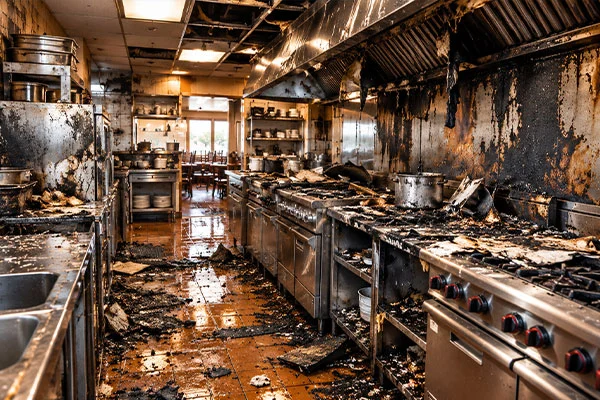
Beyond the visible fire damage, property owners may face smoke contamination, soot residue, water damage from firefighting efforts, structural concerns, and piles of damaged materials that need to be addressed before repairs can begin.
Whether you're preparing a driveway, improving a private road, leveling an uneven property, or getting a construction site ready for its next phase, the way materials are distributed across the ground makes a difference.
Every construction, demolition, and property improvement project depends on getting the right materials where they need to go—and removing the ones that no longer belong
We have established ourselves as a Trusted Partner.
With a strong commitment to safety, efficiency, and environmental resposibility, we have establishe ourselves as a trusted parter in the construction and renovation industry.